Most wedding game lists are written as lists. Twenty ideas, no sense of when any of them would happen or who they are for, and half of them require the whole room to stand up and do something British people over forty will not do.
This one is organised the other way round: by the gaps in a real wedding day. There are three of them, they are predictable, and each needs something different. Get the right thing into the right gap and the day looks after itself.
The three gaps every wedding has
Nobody plans a wedding around dead time, but every wedding has some, and it is always in the same three places.
After the ceremony, during the photographs. Anywhere from forty minutes to two hours where the two people everybody came to see are standing in a field being photographed, and 90 guests are holding a drink with nothing to do. This is the longest gap and the one couples most often forget.
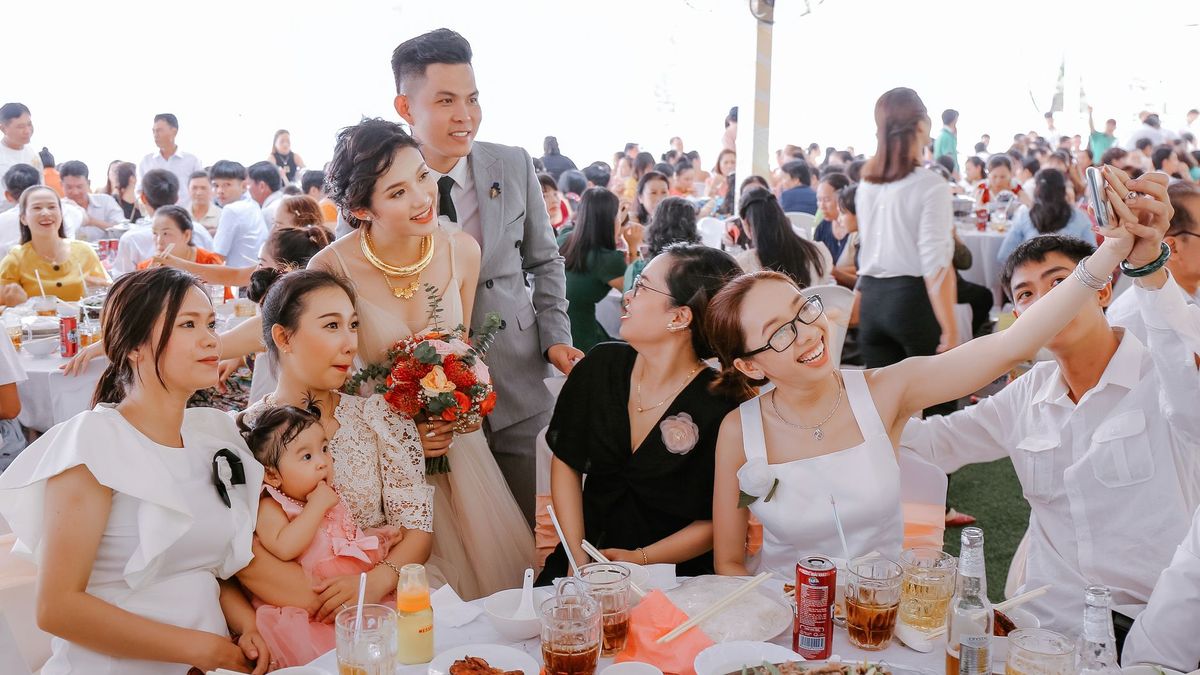
The wedding breakfast itself. Guests are seated with people they may never have met, for two to three hours, with a gap between courses and another before the speeches. Conversation carries the first hour. Something has to carry the second.
The lull before the evening. The meal has finished, the evening guests have not arrived, the band is setting up. It is short but it is when a room loses its energy, and a room that has gone flat takes real effort to lift again.
Match your games to the gap they are filling and you need three or four of them, not twenty.
Filling the photograph gap
This gap wants something guests can drift in and out of with a drink in one hand. Nothing timed, nothing announced.
Lawn games are the obvious answer and they earn their reputation — giant Jenga, croquet, boules, quoits, cornhole. They work because they take four people, need no explanation, and look good in photographs. Two or three sets is plenty; six sets of lawn games is a village fete.
The quieter option that guests remember longer is a guest book with a prompt. Not a blank book, which produces 90 signatures and nothing else, but something with a question on each card: advice for a long marriage, a memory of one of you, a song we have to play tonight. The song one has a second use — hand the cards to the DJ.
If it is raining, and in Britain it might be, all of this has to work indoors. Check that your venue has somewhere to put it before you buy anything.
- Giant Jenga, croquet, boules or cornhole — set out, unannounced, no supervision needed.
- A prompt-card guest book: advice, memories, and one card asking for a song request.
- A photo challenge on a small printed card at the bar — five things to photograph, tagged or dropped in a box.
- A shared photo album guests can upload to from their phones, so you get the two hours you were not there for.
Table games for the wedding breakfast
A table of ten people, half of whom have never met, is the single hardest social problem at a wedding — and it is one you created with the seating plan. A small game on the table solves it in about four minutes, which is roughly how long the silence would otherwise last.
The best of them are printed on a card, need nothing to be announced, and can be ignored entirely by anybody already deep in conversation.
Table trivia about the couple. Ten questions, answers on the back, one card per table. Where did they meet, whose idea was the first date, which of them is late more often. It gets a table talking about you, which is the one subject everybody there has in common.
Two truths and a lie, on a card. Each guest writes three things about themselves, the table works out the lie. It is old, it works, and it is the fastest way to get ten strangers using each other's names.
A table challenge with a small prize. Build the tallest tower from what is on the table. First table to get a photograph of all ten of them with the groom's grandmother. Something daft, one prize, announced once and then left alone.
The consequences sheet. A folded sheet passed round the table, each person adding a line of a story or a drawing without seeing the last, read out at the end by whoever is bravest. Quiet, funny, and it produces something you keep.
Games for guests who do not know each other
If your two families have never met, or half the room is from work and the other half from school, the mixing has to be designed in rather than hoped for.
The most effective thing is not a game at all — it is a seating plan that puts one confident, generous talker on every mixed table. You know who they are. Spread them out. A single person who introduces everybody is worth more than any printed card.
Beyond that, the ideas that work are the ones with a reason to move between tables. A wedding bingo card with things to find — someone who was at your first date, someone who has never been to a wedding here before, someone wearing the same colour as you — gives shy guests a legitimate excuse to speak to strangers, which is what they actually need.
Avoid anything that puts a spotlight on singles. The bouquet toss and the garter are both, in a room that includes anyone who is quietly having a hard year, a request to stand up and be counted as unmarried. Plenty of couples have dropped them for that reason alone.
The children
A child is fine for about ninety minutes and then, entirely reasonably, is not. Plan for the second ninety minutes.
The kids' table wants an activity bag per child rather than a shared pile — colouring, a small puzzle, stickers, something quiet. Personalising each bag with a name buys you an extra twenty minutes on its own. Add a disposable camera and you will get, at the end of the night, the only photographs of your wedding taken from three feet off the ground.
What actually rescues an afternoon, if there are more than about six children, is a room they are allowed to be loud in. Ask your venue. Many have one and do not advertise it. A children's entertainer for two hours over the meal costs less than most couples expect and buys every parent in the room a proper conversation, which they will thank you for more than the favours.
And feed them first. Children eat before adults at every wedding that runs smoothly.
- A named activity bag per child, not a shared pile — colouring, puzzle, stickers, something quiet.
- A disposable camera each, which produces the best unposed photographs of the day.
- A room they are allowed to be noisy in. Ask the venue; many have one they do not mention.
- An entertainer over the meal if there are more than six children — it buys every parent a conversation.
- Feed the children first, always.
What to skip
Some traditions have simply stopped landing, and it is worth saying which and why.
Anything with a microphone and a volunteer. Shoe game aside — which works because the couple are the ones performing, not the guests — handing a microphone to the room is a gamble with no upside.
Long, timed, whole-room games. Twenty minutes of a hundred people being organised is twenty minutes of the bar being closed and the atmosphere draining out. Anything that must be announced twice is too long.
Games that need explaining more than once. If the rules do not fit on a card, they will not survive three glasses of wine.
Anything that singles anybody out. Not just the bouquet toss — the "longest married couple" dance is lovely until you remember who in the room was recently widowed. If a game sorts your guests into categories, somebody in that room is in a category they did not want announced.
Where the games go in the run sheet
Whatever you choose, it needs to be on the running order that your venue, your photographer and your best man are all working from — with a name against it. A game with nobody responsible for setting it out does not happen.
One line each is enough: what it is, when it starts, who puts it out and who clears it away. The lawn games need someone to bring them in if it rains. The trivia cards need to be on the tables before guests sit down, which means before the ceremony, which means the night before in practice. The children's bags need to be distributed by somebody who is not you.
It is the least glamorous part of this and the only part that determines whether any of it actually happens.